
Fluentus Residences: Terrain-Integrated Cycladic Architecture
Location: Cyclades, Greece
Type: 3 Cave Dwellings
Completion Date: 2028
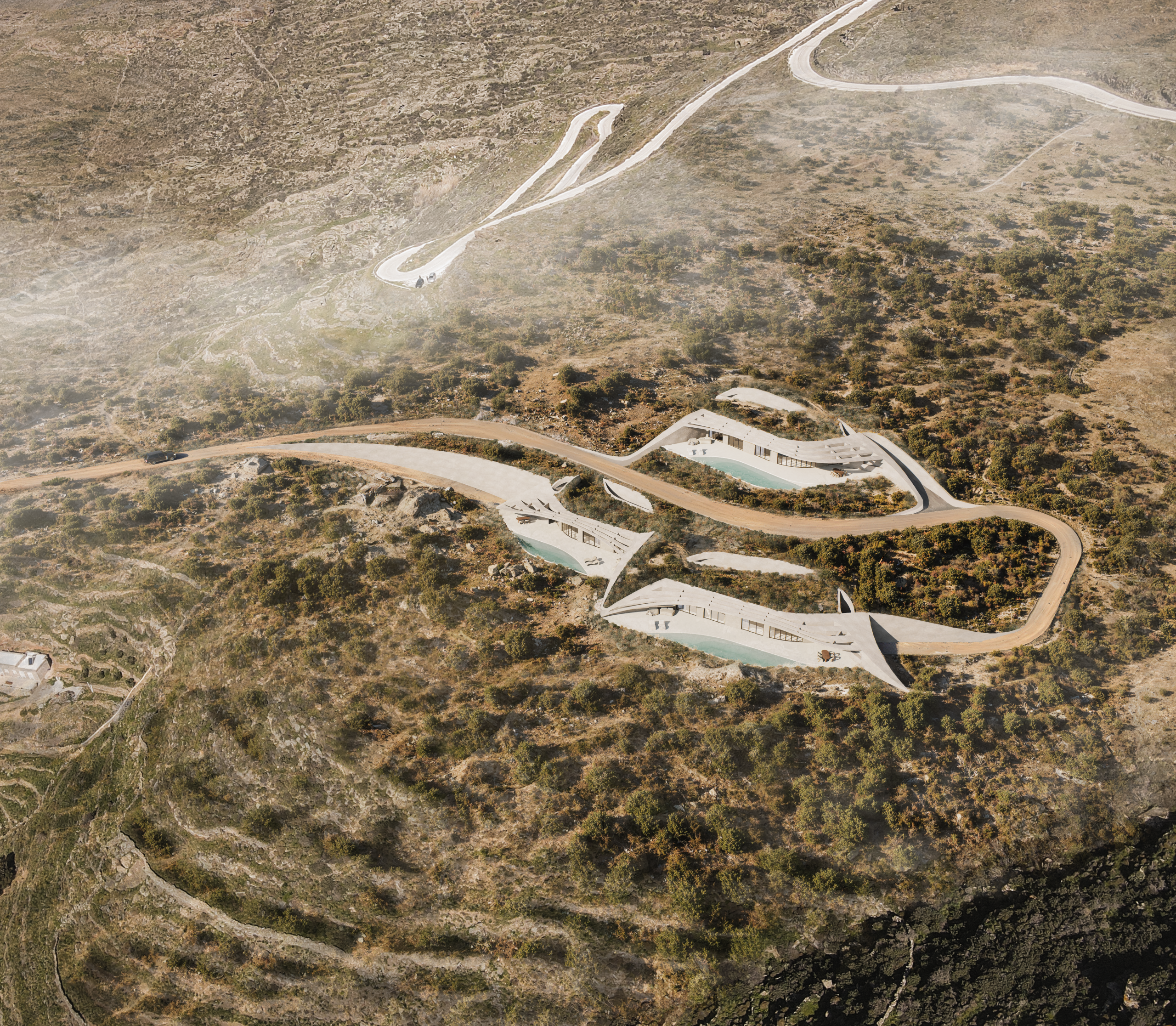
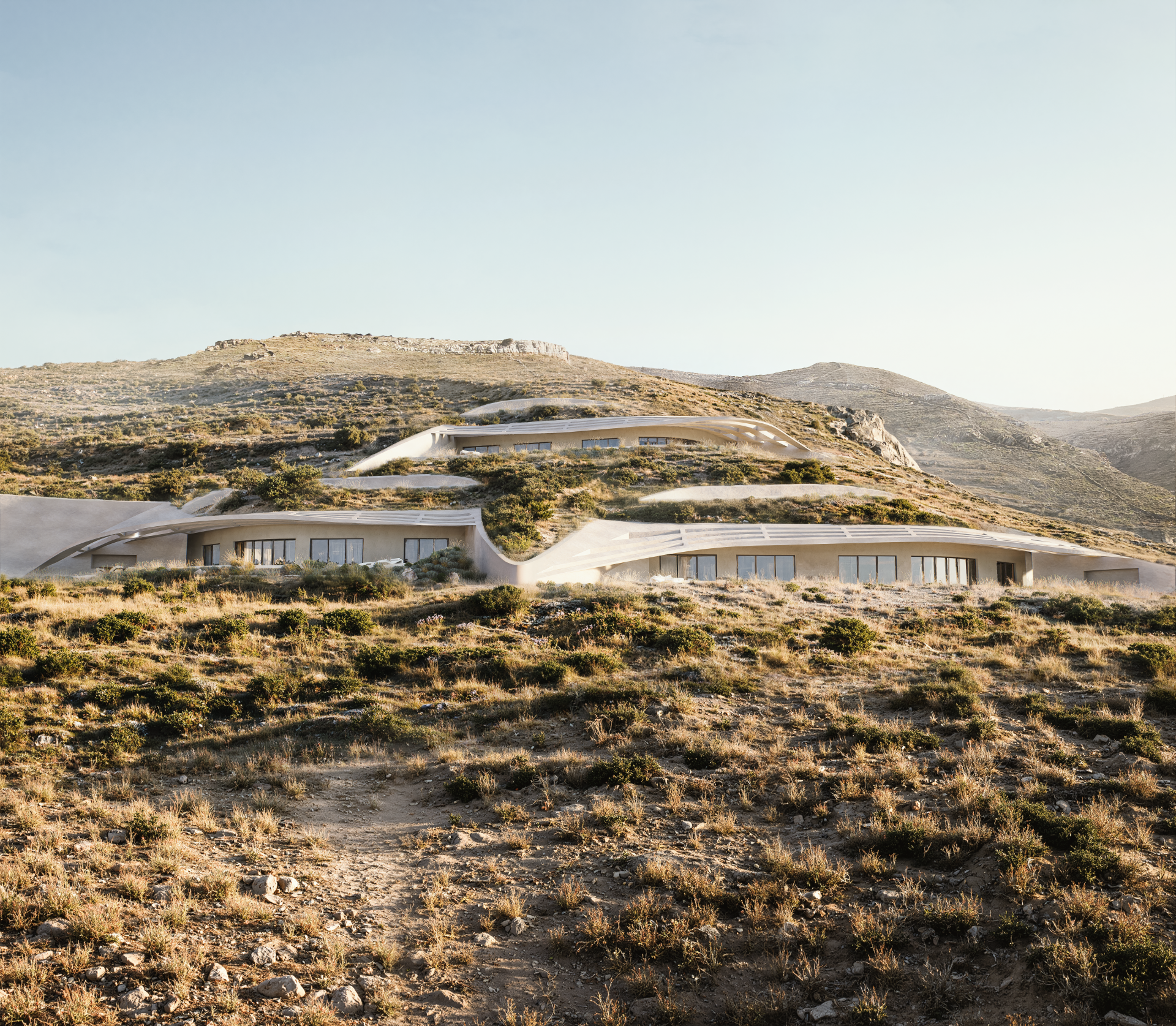
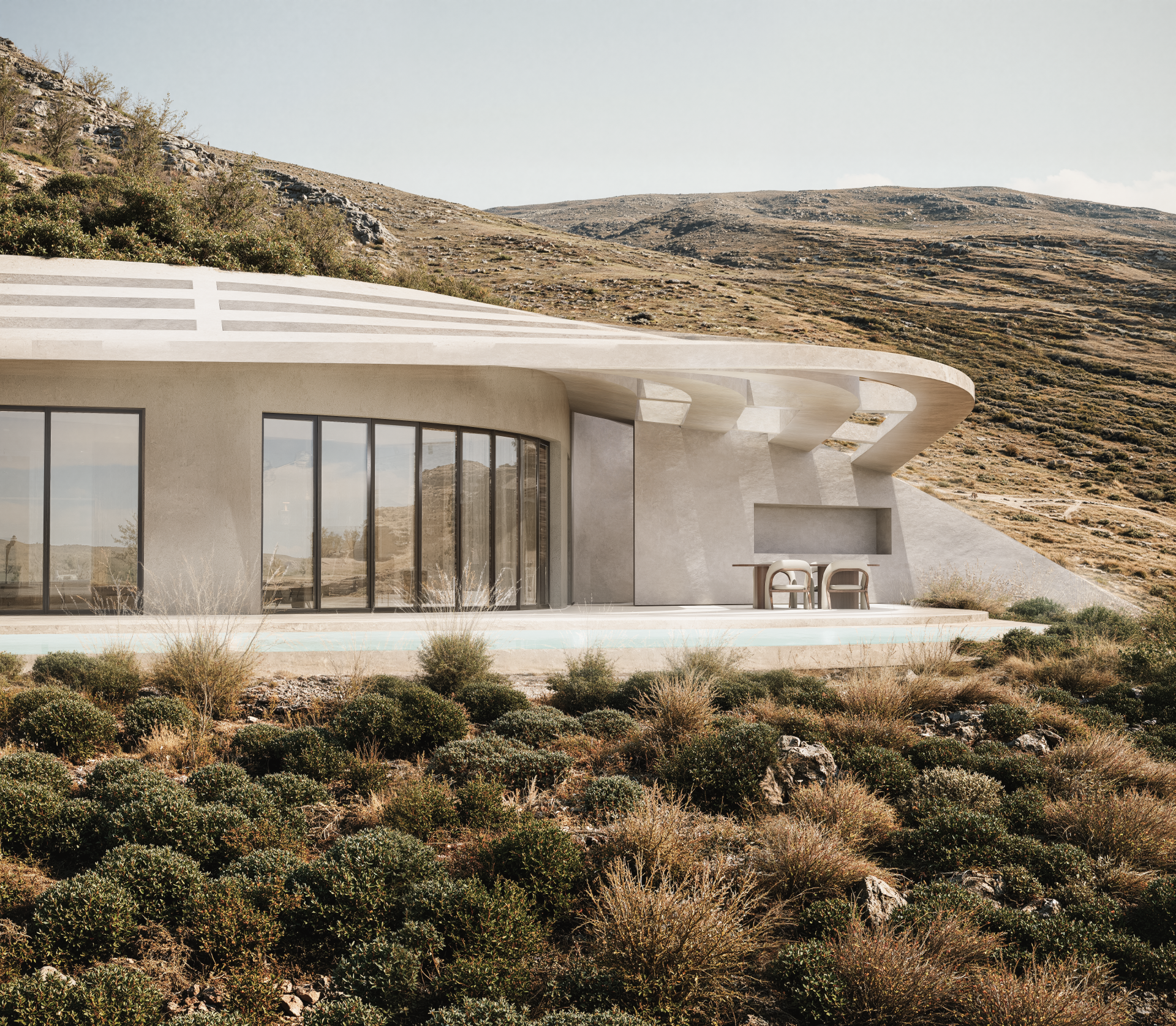
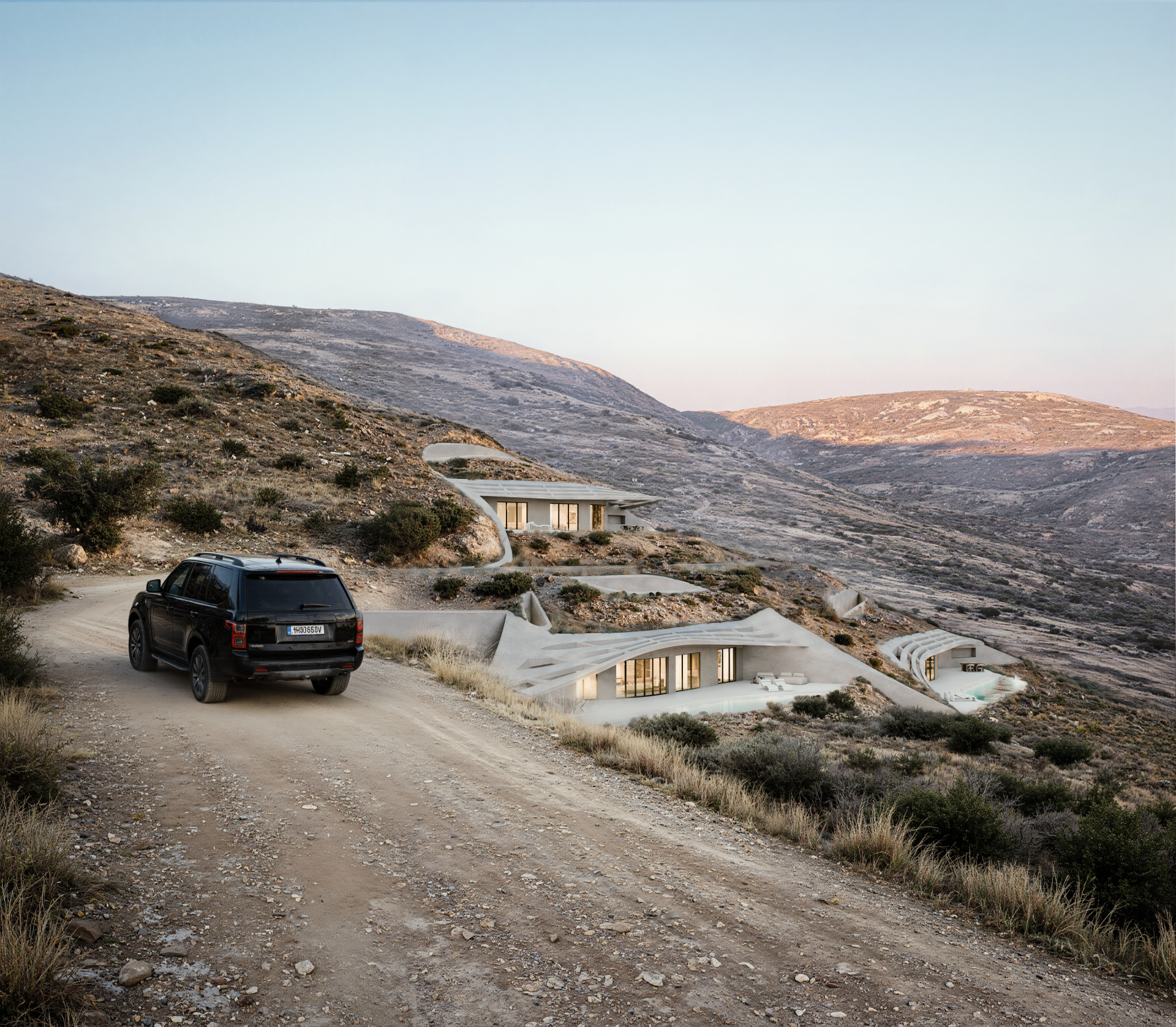
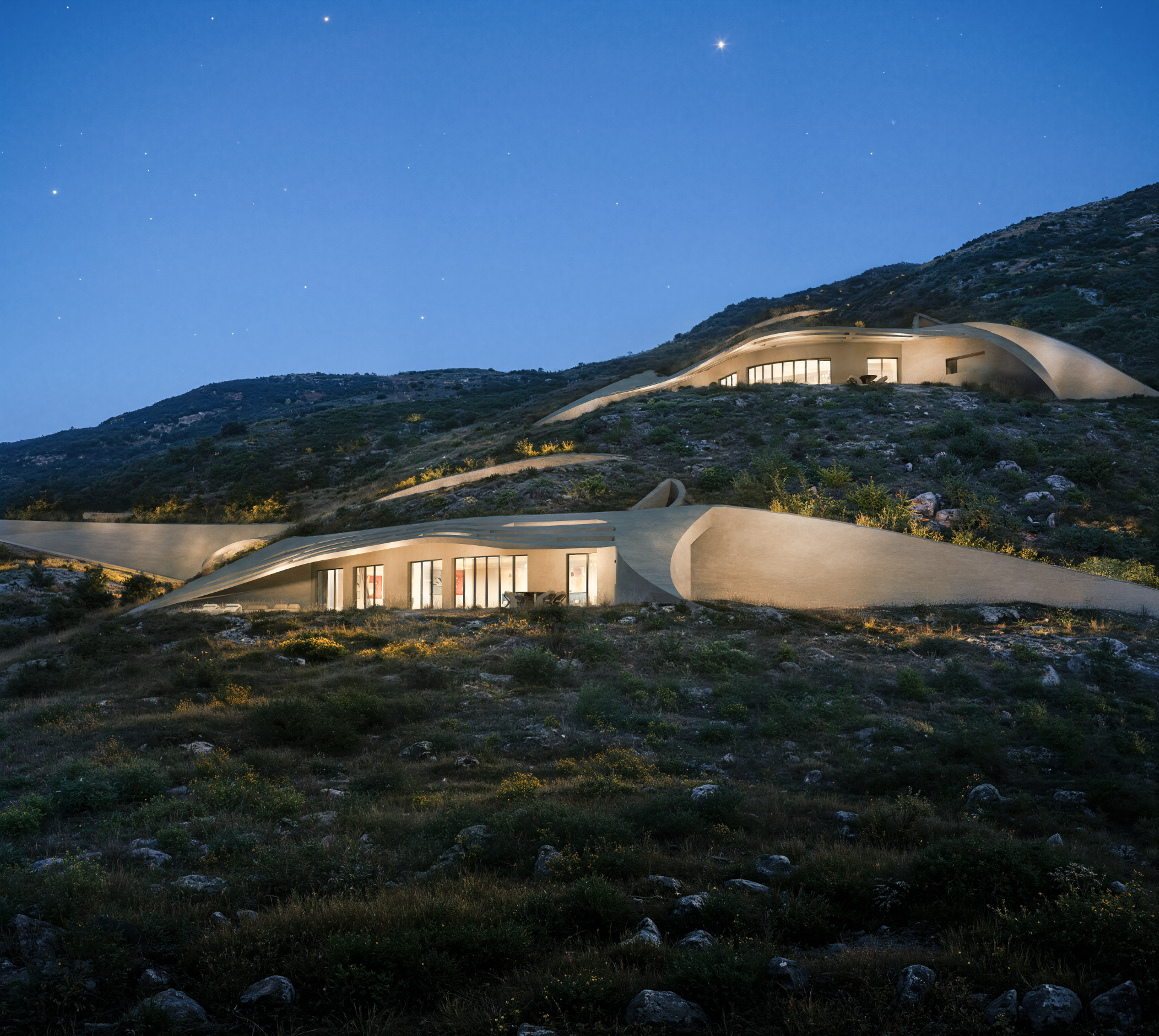
The Fluentus Residences project refers to a cave dwelling, integrated into a steep slope of the cycladic land. The terrain is utilized as the principal tool for shaping the building’s form along it’s function. The structure develops on the slope, forming a set of low, elongated volumes seemingly emerging from the earth, discreetly present in the landscape.
Architectural Composition and Subterranean Units
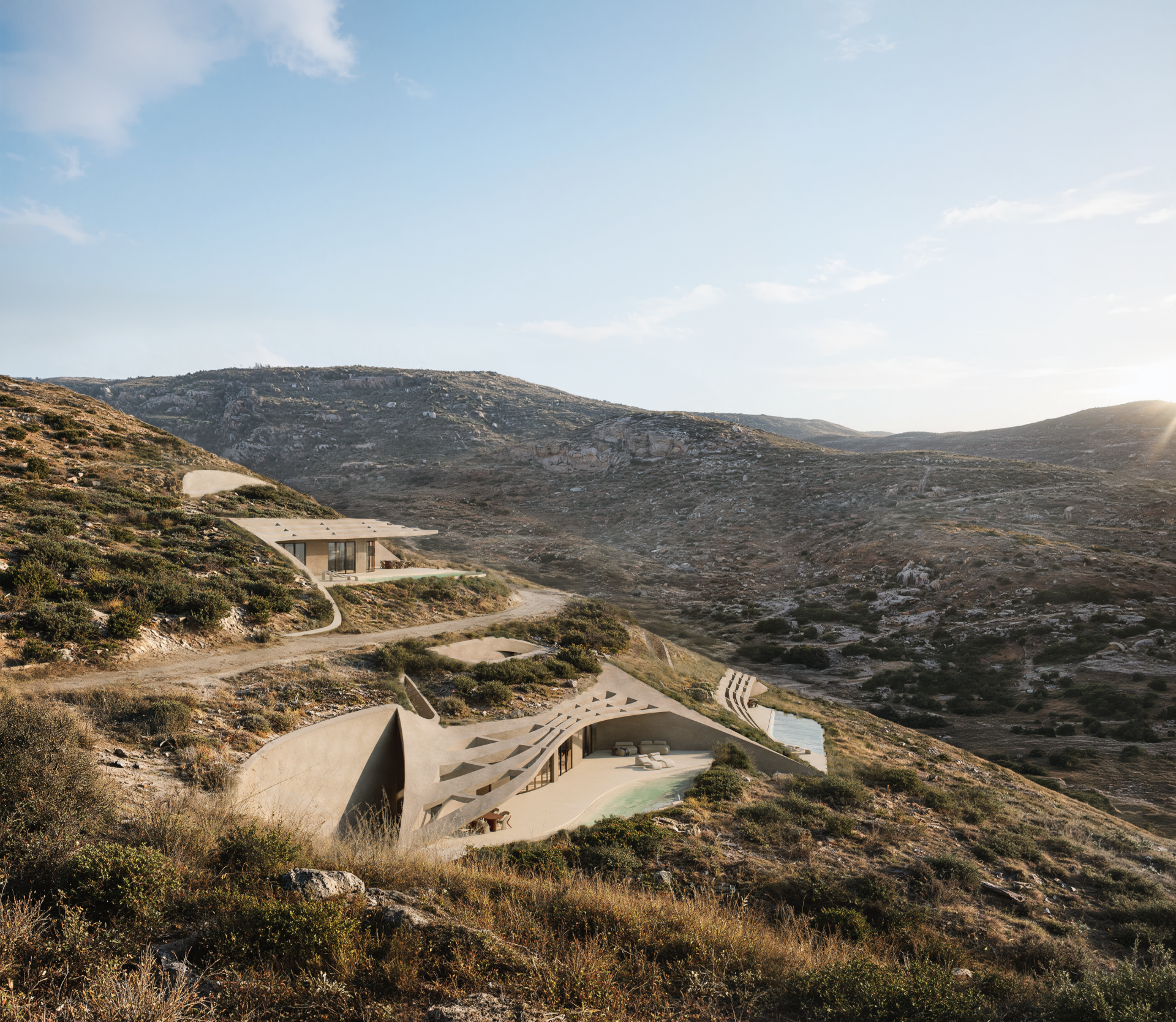
The composition is organized into three distinct subterranean units , at different levels on the hillside.
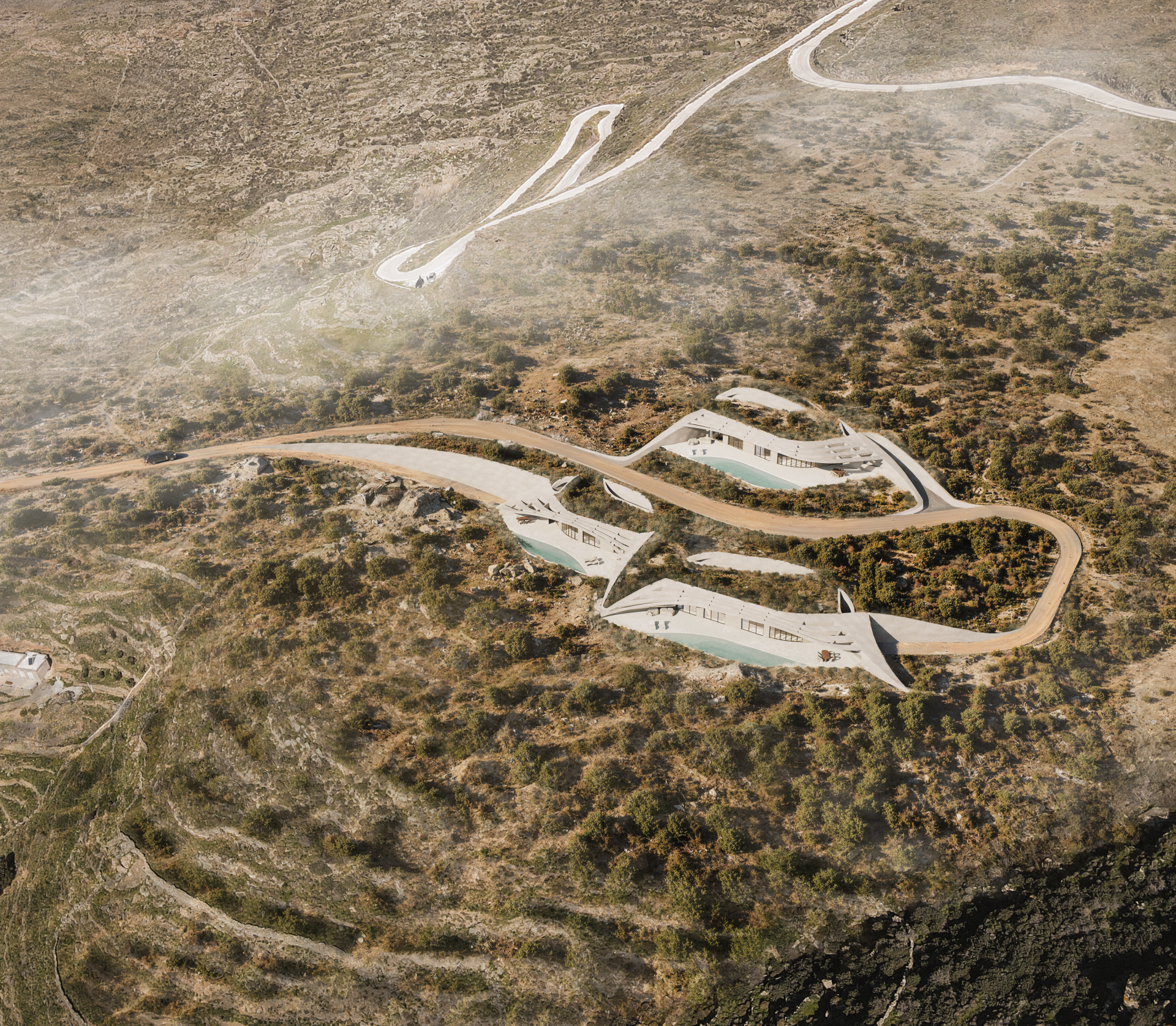
A path that unfolds along the contours of the terrain, arrives at consecutive entrance points, progressively revealing the residences. This arrangement allows residents to enjoy unobstructed views and ensures privacy to each unit’s courtyards.
Integration with the Cycladic Landscape
The roofs are extensions of the terrain itself, covered with natural vegetation, further integrating the structure into the land.
The curved form of the retaining walls and roof edges, is an element of plasticity in constant dialogue with the curves of the retaining drywall structures that are typical of the Cycladic terrain.
Materials and Spatial Experience
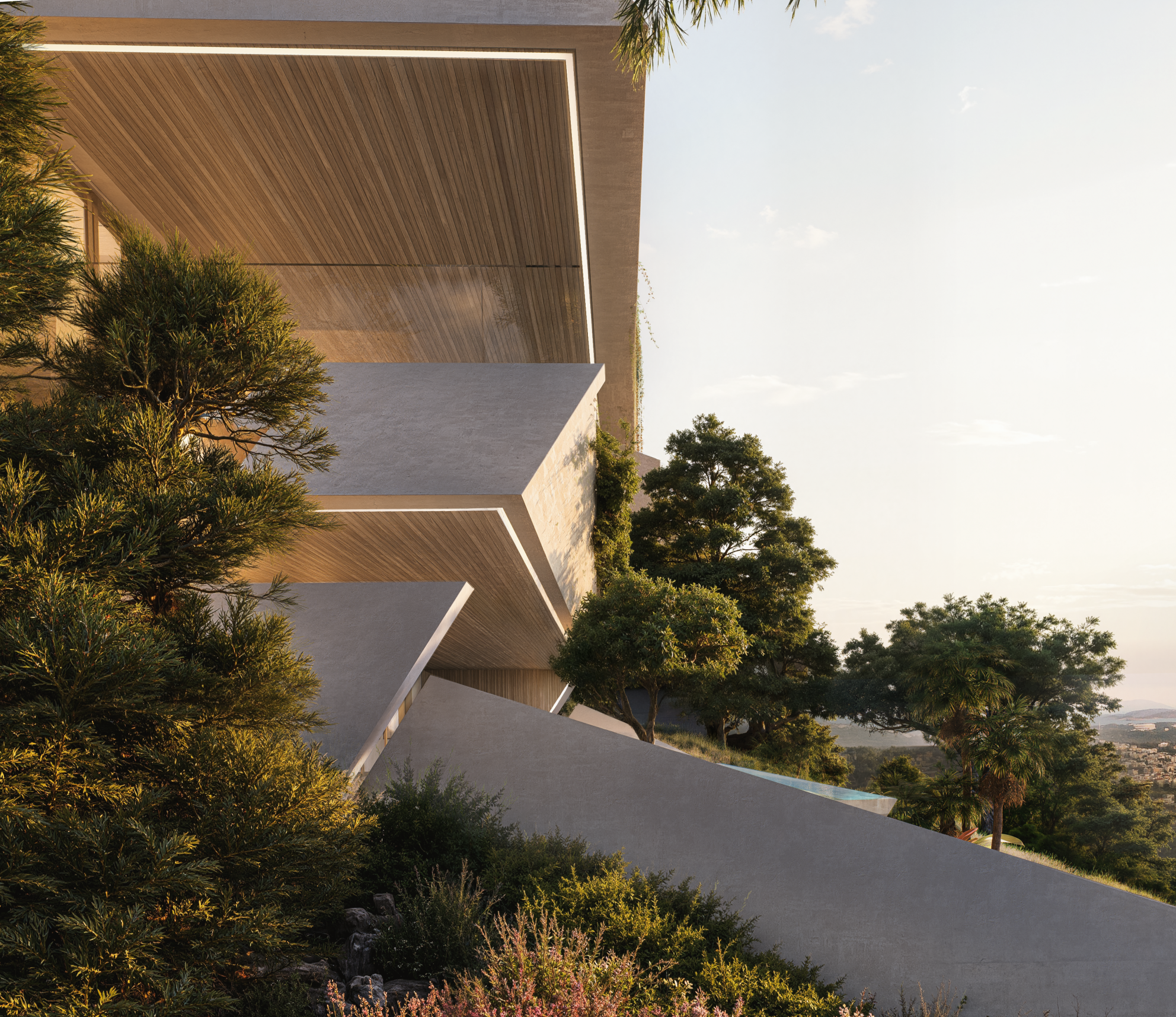
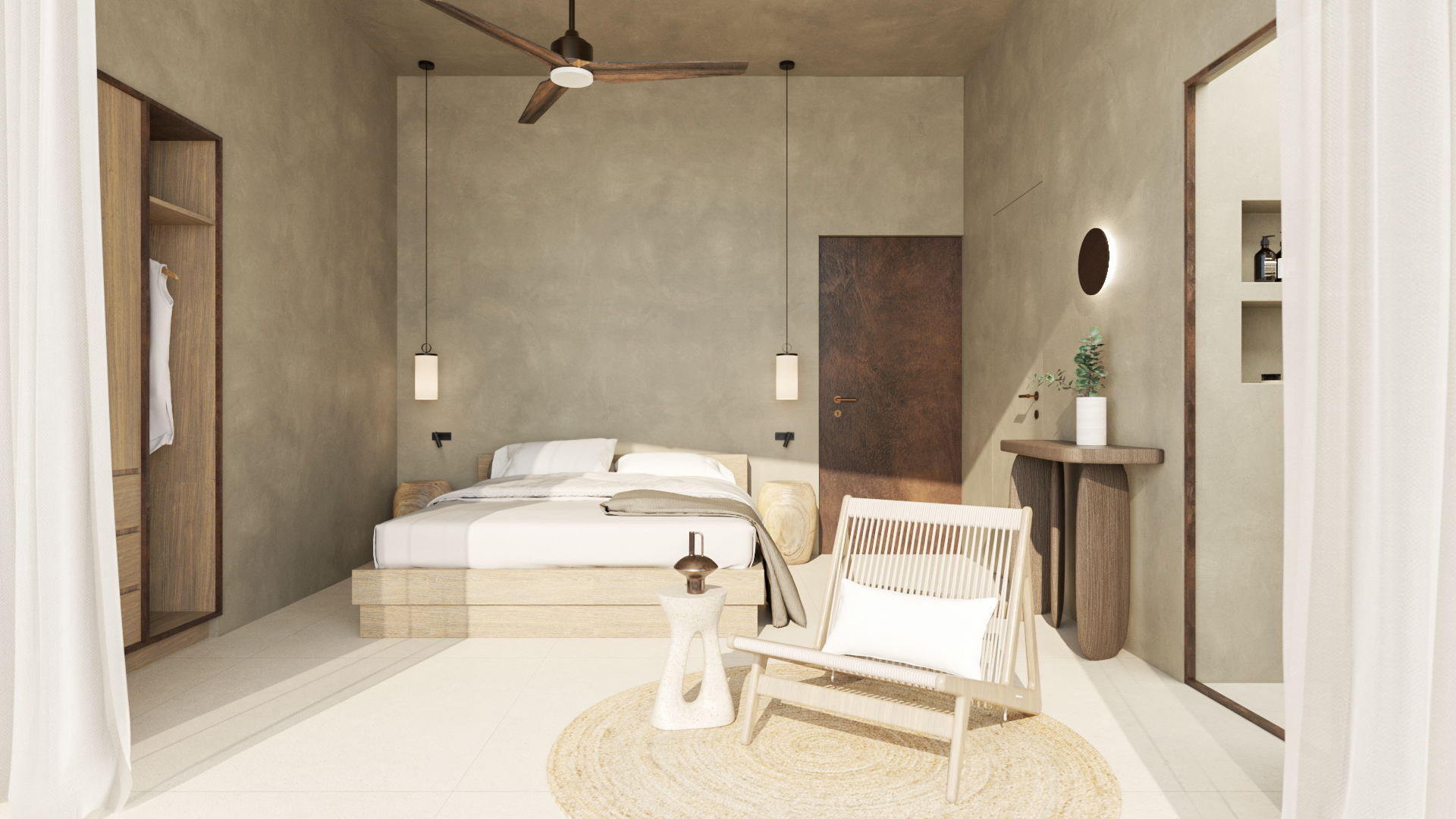
Exposed concrete in warm earth tones is the main material, allowing coherence and “integration” of the building in its environment.
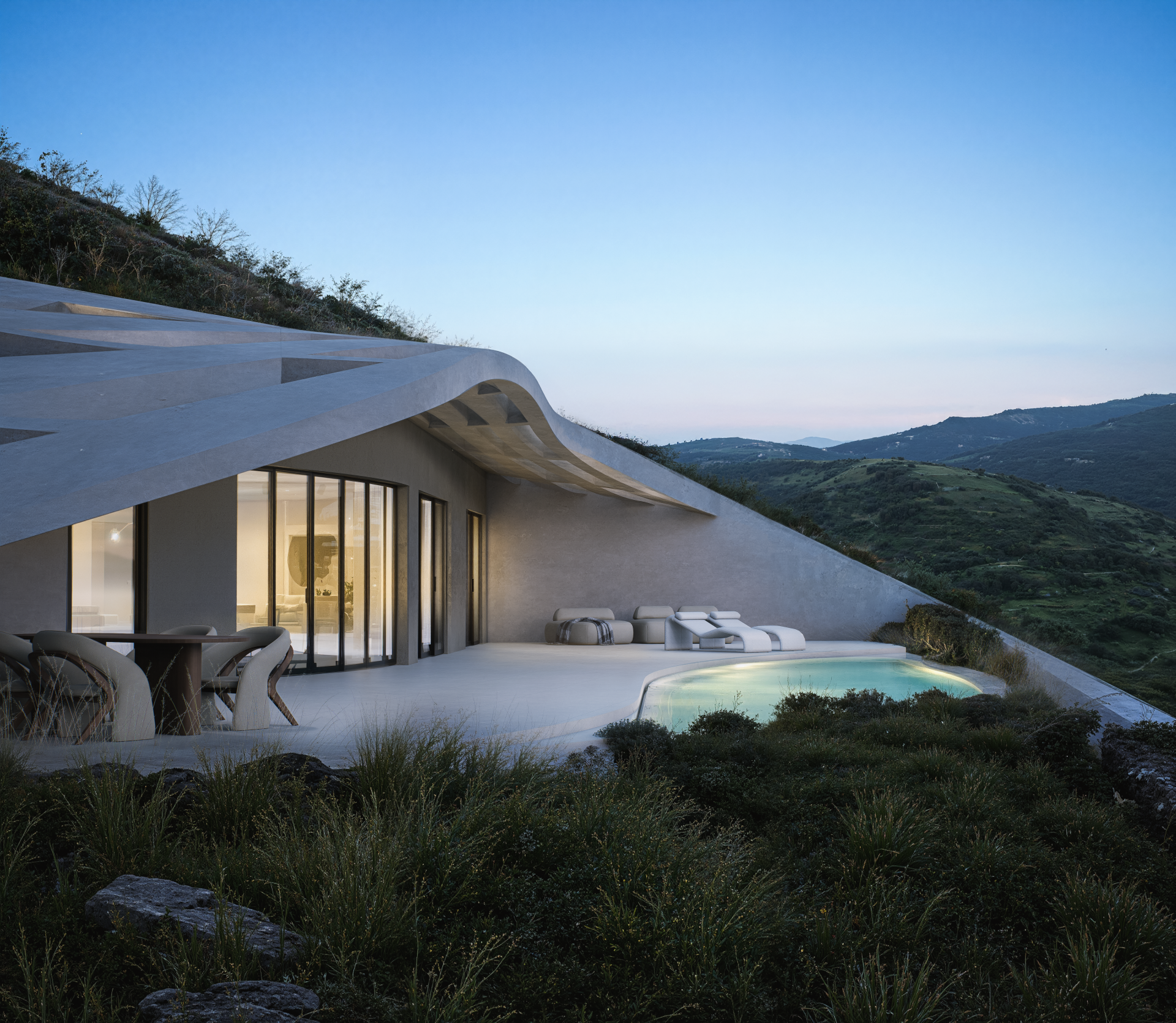
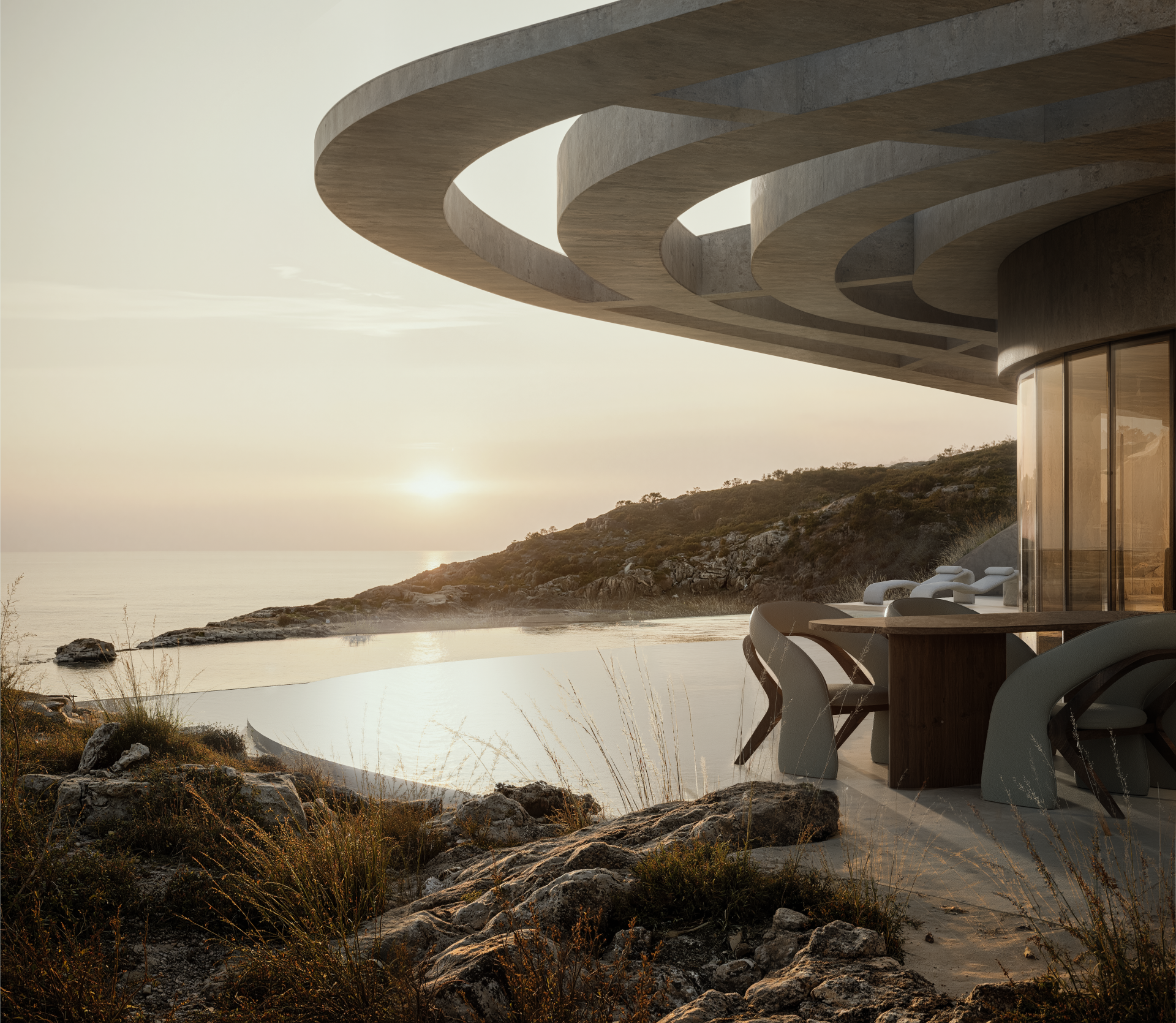
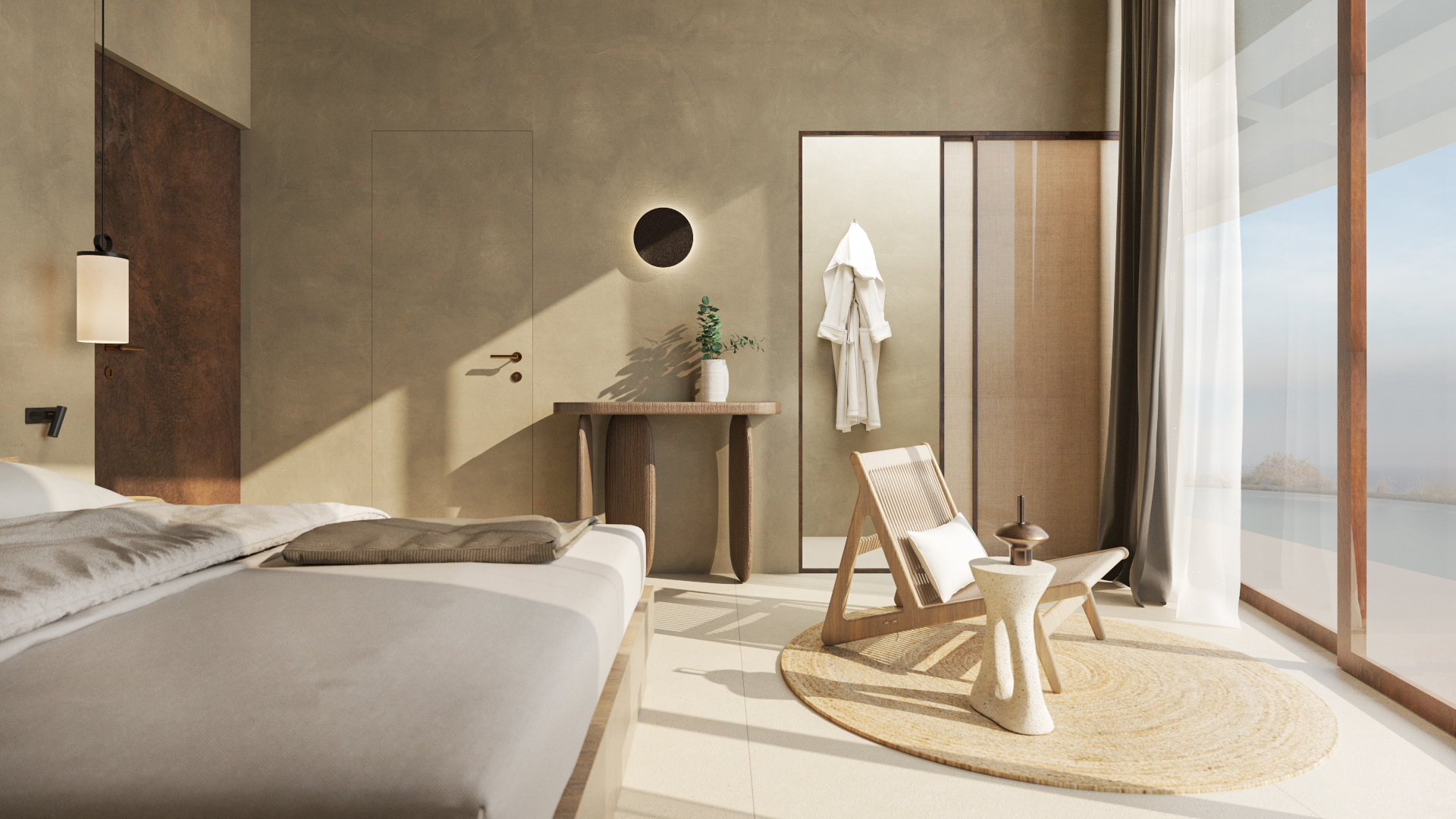
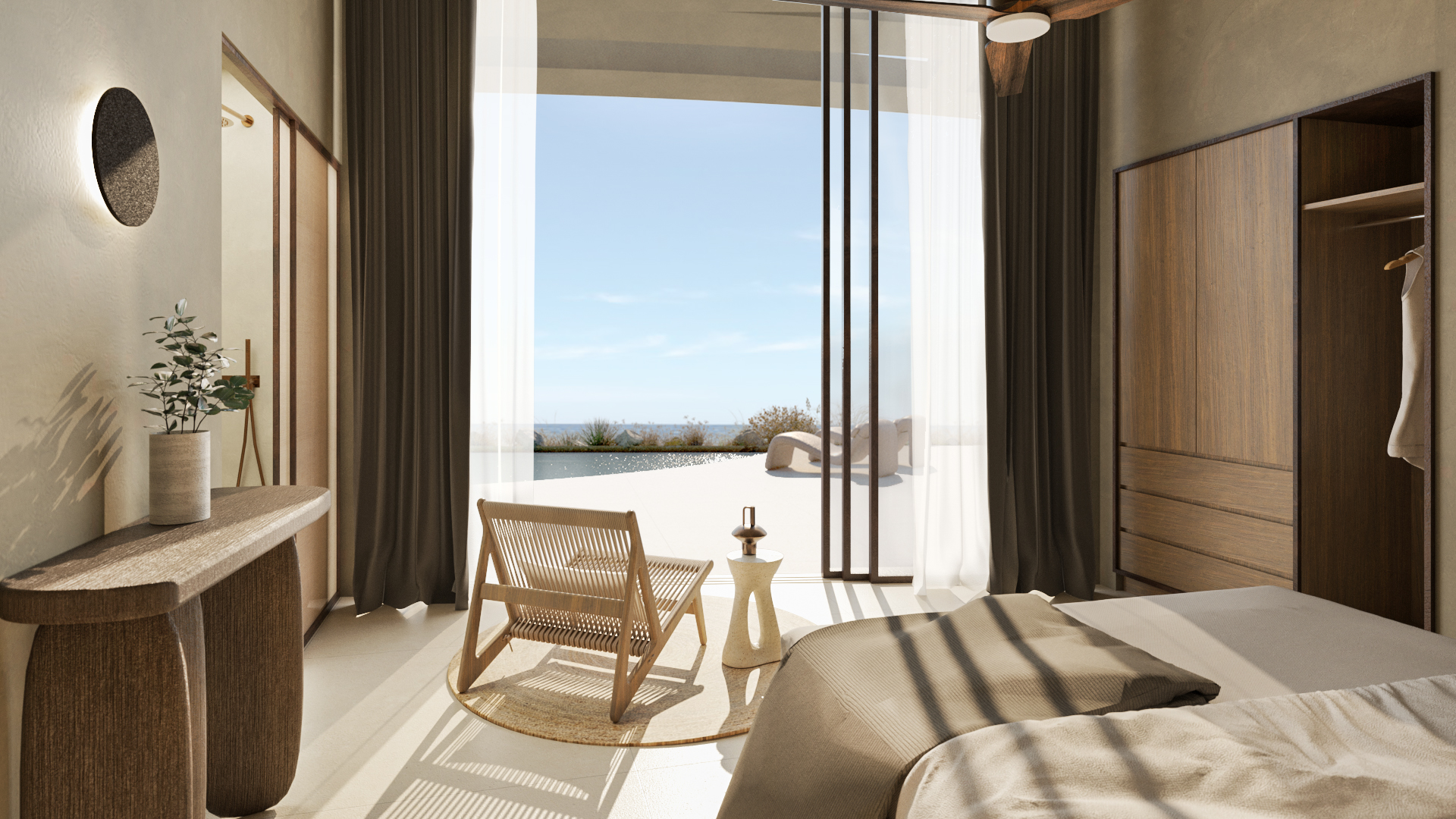
The living spaces are arranged along large windows framing the landscape, and establishing a strong spatial connection between the interior and the view. The transition from the indoor spaces to the courtyards, occurs naturally through sheltered outdoor areas, and shaded courtyards.
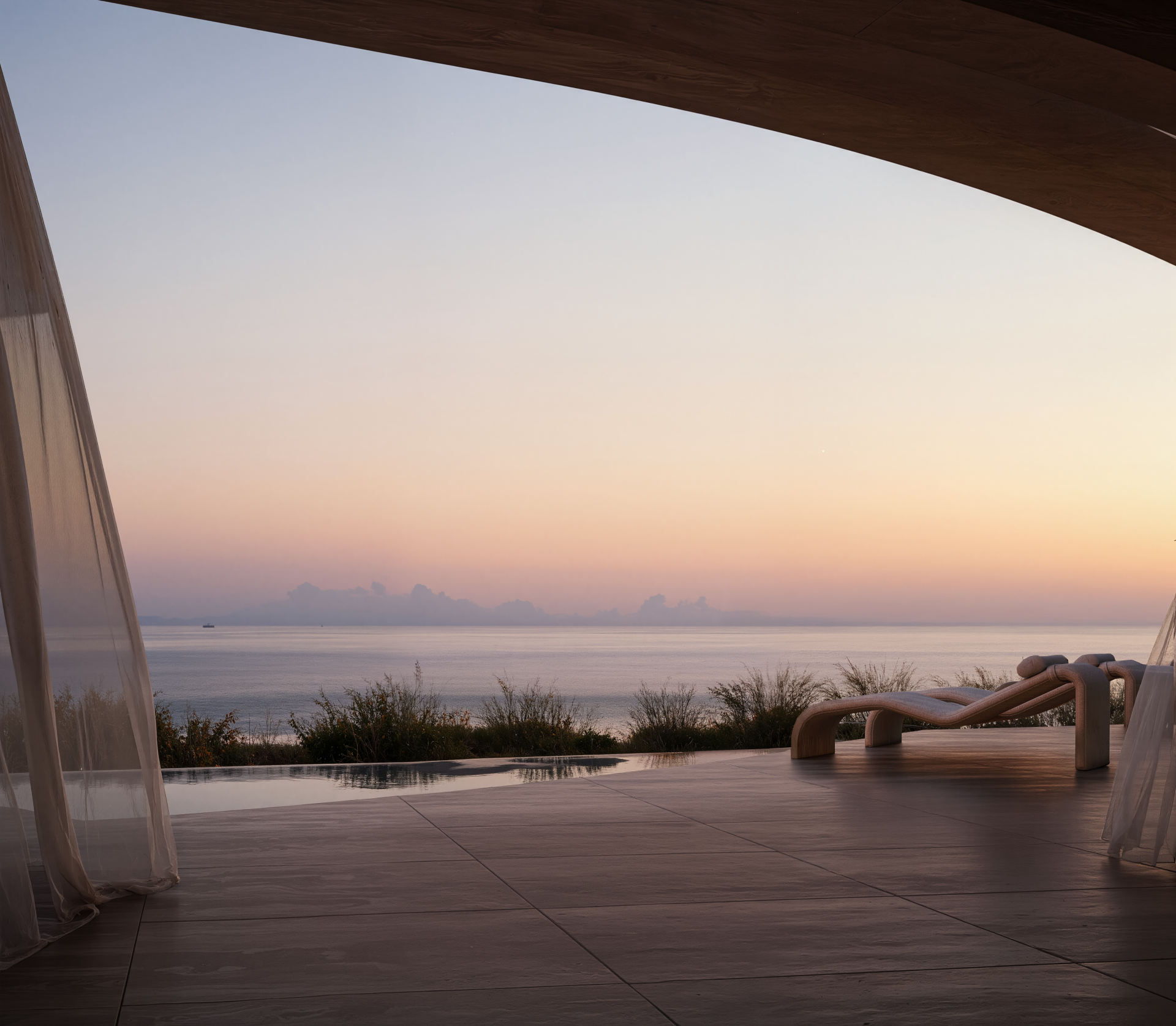
Elongated ponds that function as swimming pools with a vanishing edge, extend the water zone to the horizon.


Terrain Architecture Approach in Fluentus Residences
The architectural composition makes use of natural materials, and aims at minimizing the visual impact of the structure on the environment, by employing the principles of “terrain architecture” .
This approach interprets the ground in shaping the structure, rather than impose a structure on the land and establishes a new relationship between architecture and landscape.
Exterior 3D rendering: Idaa – Nikos Mathoudakis